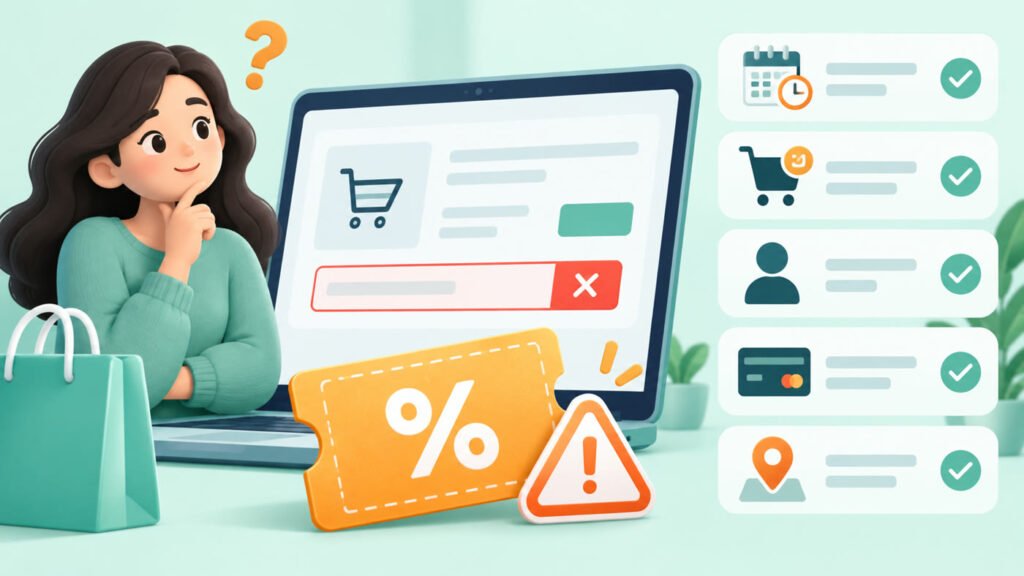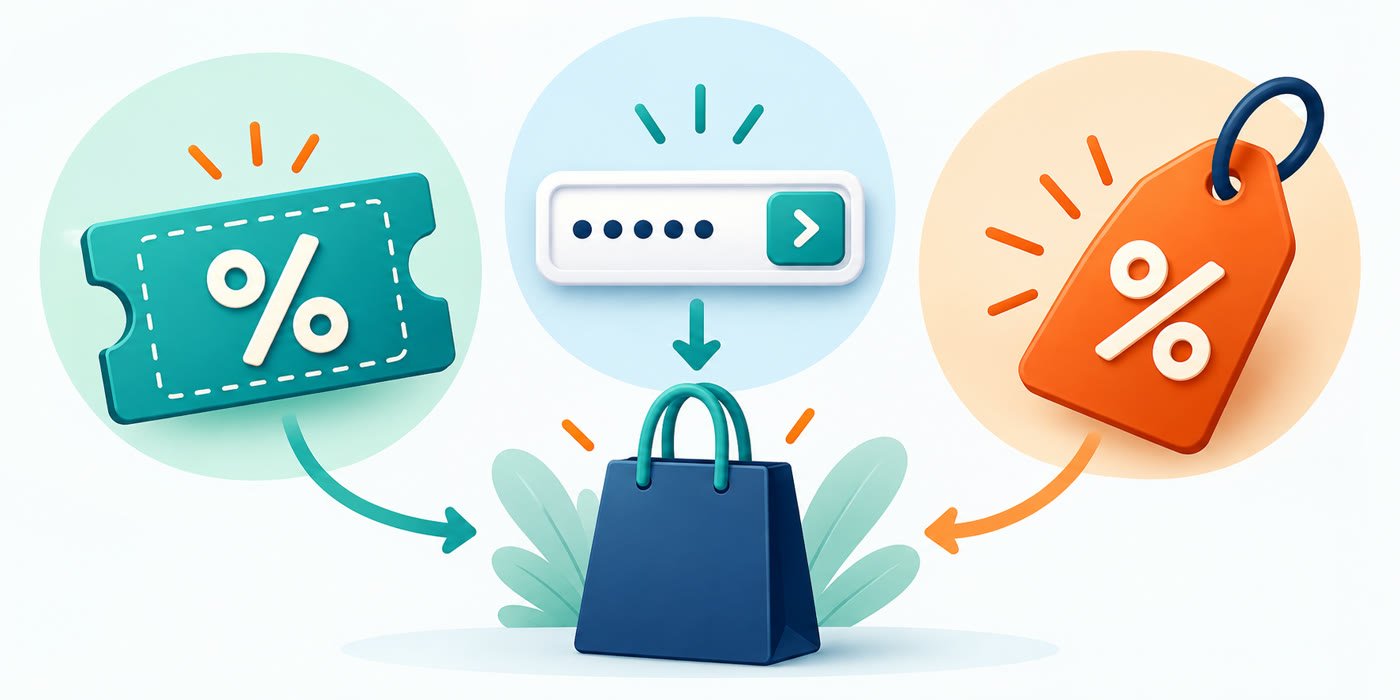
Coupon code, promo code and discount code usually describe the same basic tool: text entered at checkout to request a promotion. A deal or sale price is normally applied without typing a code. Merchants use these labels differently, so the actual terms matter more than the name.
Coupon code
A coupon code is a sequence of letters, numbers or both entered in a coupon field. It can reduce an eligible item price, order subtotal, delivery charge or another stated amount. The code may require a minimum order, particular products, a new-user account, an app checkout or a specific payment method.
The word “coupon” can also describe an on-page checkbox or button that activates a promotion without manual typing. Always look at what the merchant asks you to do.
Promo code
“Promo code” is commonly used as another name for coupon code. Some merchants prefer it because the benefit may be free delivery, a bundle or account credit rather than a straightforward price reduction. There is no universal rule that makes every promo code different from every coupon code.
Discount code
A discount code is another overlapping label. It usually signals a reduction triggered by entering a code, but the calculation can vary. It may apply to a fixed amount, a percentage, selected items or an eligible subtotal subject to a cap. Read the terms instead of assuming that “discount code” guarantees a particular type of saving.
Automatic deal
An automatic deal is applied because the cart meets the merchant’s conditions. You may see it as an item-level markdown, a multibuy promotion, free delivery or an order-summary adjustment. No code is normally required, although signing in, selecting a payment method or adding specific items may still be necessary.
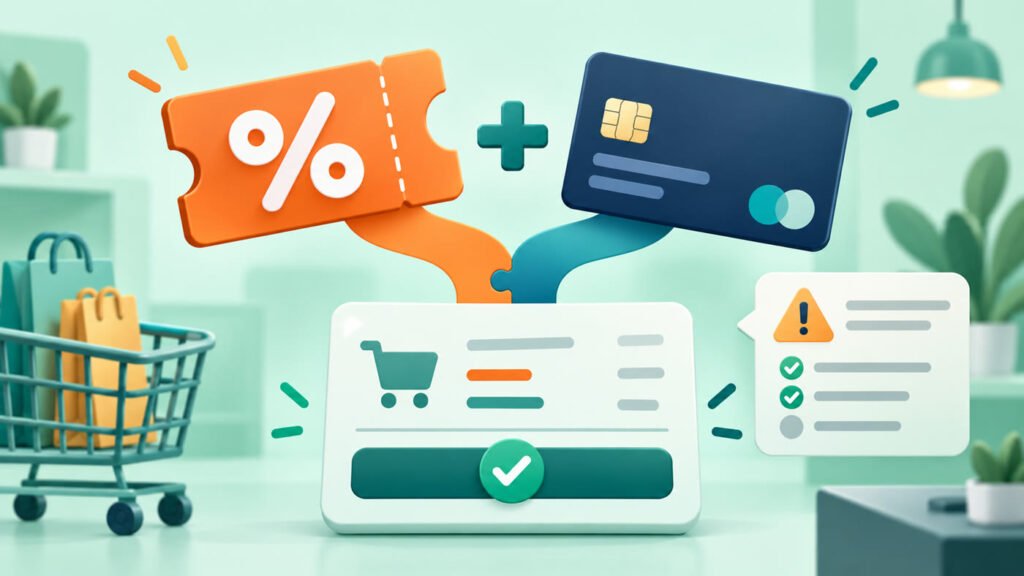
Automatic deals can sometimes conflict with a manual code. Compare the final checkout total before removing either benefit.
Sale price
A sale price is the current price displayed for an item during a promotion or markdown period. It is usually available without a code, but stock, seller, size, colour, model and location can affect availability. A crossed-out reference price does not by itself tell you whether now is the right time to buy.
Bank or payment offer
A bank offer depends on an eligible card, account, network or payment route. It may appear as an immediate discount, later cashback or EMI-related benefit. Minimum spend, card variant, issuer, transaction type, product and merchant exclusions can apply.
A payment offer is a broader label that may cover banks, cards, wallets, UPI or other payment providers. Our guide on combining codes with bank offers explains how to check whether two promotions can work together.
Cashback
Cashback is normally credited after a qualifying payment rather than deducted from the amount paid at checkout. The destination, timing and conditions can vary: it may return to a card account, bank account, wallet or merchant balance. Treat an immediate discount and later cashback as different benefits when comparing totals.
New-user offer
A new-user offer is restricted according to the merchant’s definition of a new customer or first order. Eligibility may consider account and order history, verified contact details, device or payment signals. It should not be assumed that creating another account is permitted. See New-User vs Existing-User Coupons for a fuller explanation.
Why labels can be confusing
One retailer may call a checkout code a coupon while another calls the same mechanism a voucher or promo code. A merchant may also use “offer” for a code, an automatic sale, cashback or a payment promotion. The useful questions are:
- Do I need to enter or activate anything?
- What items and subtotal are eligible?
- Who can use the promotion?
- Which channel and payment method are required?
- Is the benefit immediate or credited later?
- Can it be combined with another promotion?
How Mega Sale Coupon describes offers
Our Coupon Verification Policy defines how we present codes, deals and status information. We avoid treating a label as proof that every shopper qualifies. The retailer’s live product, cart and checkout terms remain decisive.
You can browse merchant guides or explore categories such as Fashion & Footwear and Electronics & Appliances to understand common promotion mechanics in context.
Read our affiliate disclosure. To report an unclear or outdated statement, use the contact page.