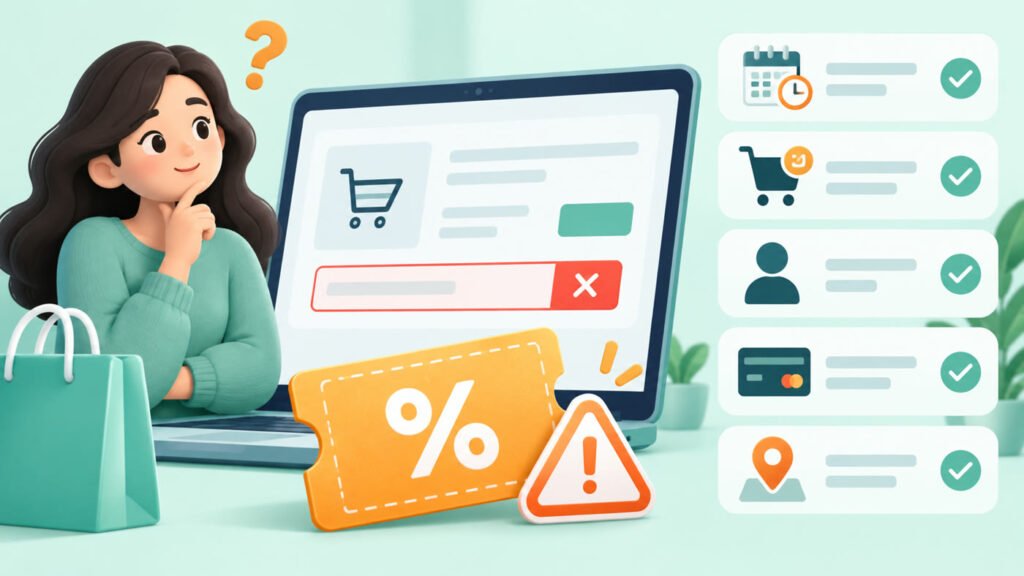
One-time does not always mean one use in every possible account. Retailers may apply a one time coupon limit to a customer profile, email address, phone number, device, payment method, delivery address or household.
Read the definition of an eligible customer
New-customer and first-order promotions often have narrower rules than the headline. Check whether previous guest orders count and whether members of the same household are treated separately. Creating extra accounts can violate the retailer’s terms and may cause cancellation.
Confirm when the use is consumed
Some systems mark a coupon used when an order is placed, even if payment later fails or the order is cancelled. Others restore it after a refund. If checkout fails, contact the retailer instead of repeatedly creating orders that could reserve stock or trigger fraud controls.
Keep the basket within the written rules
A one-use code may also have category exclusions, minimums and a maximum saving. Verify the eligible subtotal after removing gift cards, subscriptions or marketplace products. The coupon field showing accepted is helpful, but the final order summary should show the actual reduction.
Before you decide
- Identify who or what the one-use rule applies to.
- Check whether a cancelled order restores eligibility.
- Use one legitimate account and follow retailer terms.
Bottom line: Identify who or what the one-use rule applies to. Check whether a cancelled order restores eligibility. Use one legitimate account and follow retailer terms. Check current retailer terms before paying because prices, stock and promotions can change.